
Guides
What is Remote Supports? A Complete Guide.
 Author: Mitchell Brandt | Marketing & Communications Maven
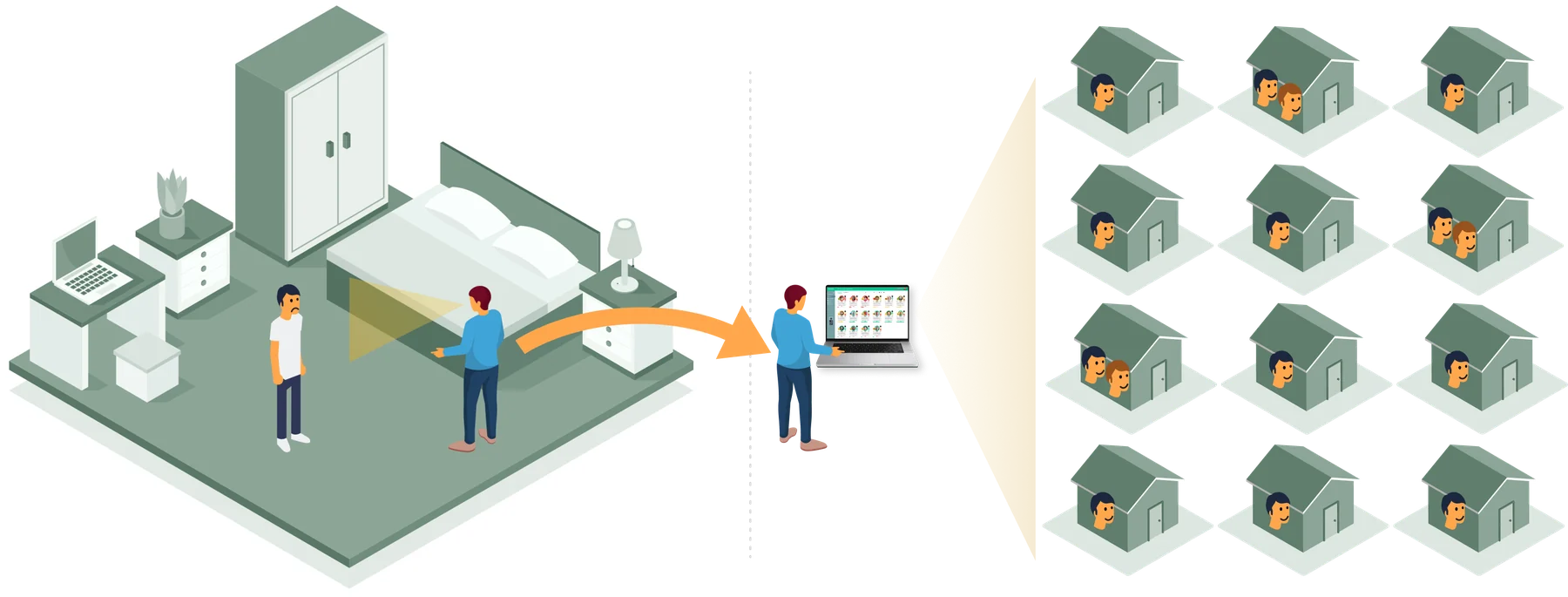
Remote supports is a model of care that uses technology including sensors, alerts, and two-way communication to support people with intellectual and/or developmental disabilities (I/DD) in living independently at home, without requiring a support person to be physically present.
The Traditional Model vs. Remote Supports
It used to be that in-home support required a DSP (direct support provider) to be physically present in an individual’s home. This model has run up against several limitations including staffing shortages, cost, privacy, trust, hours of coverage, and other concerns.
Over the years as technology and connectivity have improved, remote supports has emerged as a safe, reliable, trustworthy alternative and/or replacement.
How Does Hearo Remote Supports Actually Work?
After an individual’s needs are assessed, a plan is put in place that accounts for the appropriate sensors and devices that help that person achieve maximum independence. The ecosystem scales from a single wearable device to a full smart-home monitoring suite customized per individual.
Central to the Hearo platform is the Hearo Hub. It’s a purpose-built gateway roughly the size of an Apple TV. It ships with its own cellular radio — no broadband, no Wi-Fi dependency, and no patient setup. The included battery backup ensures continuous monitoring even through power outages.
Sensors throughout the home report to the hub in real time. The hub transmits encrypted data to the Hearo cloud platform. Data is processed through a customizable rules engine. For example, if motion stops for a set period, if medication isn't dispensed, or if a fall is detected, the system triggers alerts, escalations, and/or automated actions. Remote DSPs and family members are directly notified of an individual’s status.
Who Is Remote Supports For?
Remote supports and assistive technology grew out of the needs for adults with I/DD to live on their own without in-home personnel. But upon learnings, adaptation, and successes, the swath of individuals who can benefit from remote supports has grown to include people with behavioral and mental health concerns, those with hearing and vision impairment, elderly adults seeking to age in place, and many others.
The Benefits of Remote Supports
For individuals
- Greater independence and privacy
- Support available when needed, not on a fixed schedule
- Living in their own space without constant staff presence
For families
- Peace of mind through real-time alerts
- More natural home environment for their loved one
- Flexibility and responsiveness
For providers and coordinators
- Addresses DSP staffing shortages
- Serves more individuals with existing staff
- Expands services into rural and/or underserved areas
For the system
- Cost-effective use of Medicaid waiver funding
- Scalable model for growing I/DD population
How Does Remote Supports Fit into the Medicaid Waiver System?
Remote supports is billable under HCBS Medicaid waiver programs. Our director of remote supports works closely with individuals and their families throughout the onboarding process (and after) to ensure proper billing is always achieved.

Remote Supports vs. Assistive Technology — What's the Difference?
Many people use the phrases interchangeably, which is fine, but here’s how we define the two phrases.
Assistive technology = devices and tools that help someone do something, e.g., medication reminders, communication devices, smart home controls, etc.
Remote supports = the service model that uses technology (and assistive technology) to deliver ongoing support.